
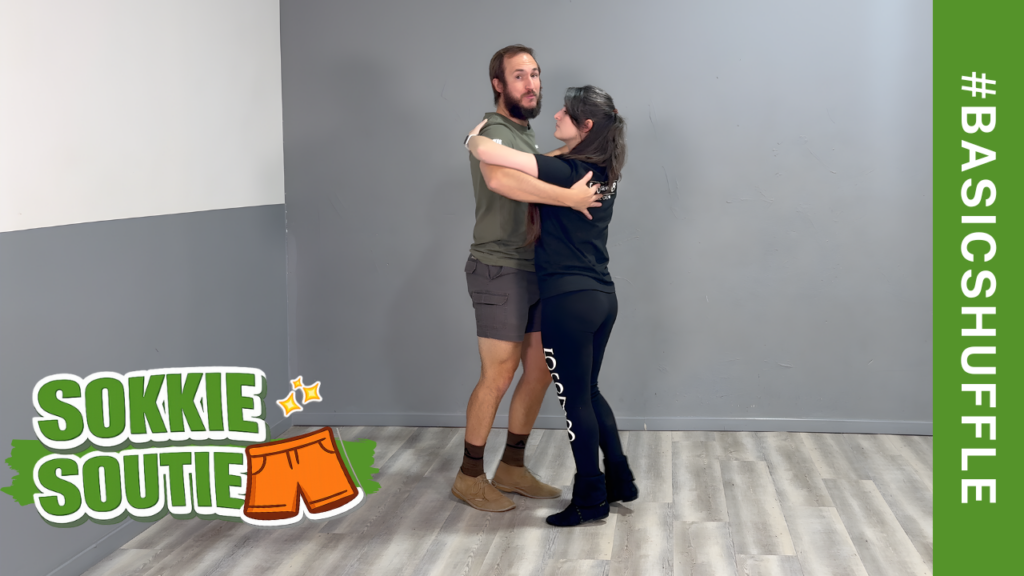
Learn the Foundation of Sokkie Dancing
If you are new to sokkie dancing, the first step you need to learn is the basic shuffle. This simple movement forms the foundation of the dance and allows partners to move comfortably together on the dance floor.
In this tutorial, Matthew Pienaar, also known as Sokkie Soutie, walks through the fundamentals of the shuffle and explains how leaders and followers move together to maintain rhythm and connection.
You can watch the full tutorial on the Sokkie Soutie YouTube channel below.
What Is the Sokkie Shuffle?
The shuffle is the basic step used in sokkie dancing. Instead of lifting the feet like walking, the movement stays close to the ground and glides smoothly with the music.
The leader typically moves forward, while the follower moves backward, allowing both partners to stay connected and in rhythm.
Once you are comfortable with the shuffle, you can begin adding turns, dips, and combinations.
How the Leader Steps
Matthew explains that the leader usually begins with the left foot.
The movement is a small forward shuffle while keeping the body relaxed.
Important points for leaders:
• Start with your left foot
• Shuffle forward most of the time
• Occasionally move backwards if needed to avoid other dancers
• Keep your weight on the balls of your feet
• Let your heels lightly brush the ground rather than standing on them
This helps keep the movement smooth and controlled.
How the Follower Steps
The follower mirrors the leader’s movement.
When the leader starts with the left foot, the follower begins with the right foot and generally moves backwards.
Key tips for followers:
• Start with your right foot
• Move mostly backwards while the leader moves forward
• Stay light on the balls of your feet
• Keep the movement smooth and relaxed
The follower adjusts naturally when the leader changes direction.
Keep Your Movement Smooth
One of Matthew’s key tips is to avoid walking while dancing.
When walking, the feet lift and step down. In sokkie, the feet should stay close to the floor, creating a smooth shuffle.
He also explains that dancers should avoid:
• exaggerated shoulder movement
• bouncing up and down
• stiff upper body movement
Instead, the upper body should naturally follow the motion of the feet.
Foot Position With Your Partner
When dancing together, the partners step between each other’s feet.
This helps prevent accidentally kicking each other if the timing gets slightly off.
For example:
• the leader’s right foot moves between the follower’s feet
• the follower’s right foot moves between the leader’s feet
This positioning keeps the movement comfortable and safe.
Proper Dance Hold
Matthew also demonstrates the correct partner hold.
For the leader:
The right hand should be on the follower’s shoulder blade, not too low or too far on the arm. This position allows the leader to guide the follower comfortably.
For the follower:
• the left hand rests on the leader’s shoulder
• the right hand connects with the leader’s hand in a relaxed hold
Hands should be comfortable and relaxed, not stiff or tightly clenched.
Maintaining Rhythm
The most important part of the shuffle is maintaining the music’s rhythm.
Whether you are:
• moving forward
• moving backward
• turning slightly on the dance floor
Your feet should always stay on the same beat.
Once you maintain the rhythm, everything else becomes much easier.
The Foundation of Sokkie Dancing
The basic shuffle might look simple, but it is the foundation of almost every sokkie move.
Once you feel comfortable with this step, you will be ready to learn combinations such as:
• turns
• dips
• spins
• social dance combinations
Learn More Sokkie Moves
You can watch more tutorials and learn new moves on the Sokkie Soutie YouTube channel, where Matthew shares step-by-step breakdowns of sokkie dancing.
If you would like to learn in person, Matthew also teaches Sokkie classes at Five6seven8 Dance Studio in Johannesburg.